Post-Winter Motorcycle Checklist: Getting Your Bike Ready for Spring Riding

Motorcycle Tyres Tips & Advice
a picture of Ari who is the owner of Tyreman M/C
Author
Ari Kypuros Owner & Founder of Tyreman M/C
15 mins August 14, 2026
Spring Motorcycle Maintenance

Winter storage takes a toll on a motorcycle, even when it’s kept under cover. Before the first proper ride of the season, a proper once-over saves you from breakdowns, blown fuses, or a bike that simply won’t start. This post-winter motorcycle checklist covers everything worth checking, from the battery to the tyres, so you’re riding on a bike that’s actually ready, not just one that looks like it.

At Tyreman M/C, we see the same pattern every spring: bikes that were fine in autumn come in with flat batteries, worn rubber, or brakes that need attention after months of sitting idle. Our workshop runs through this exact checklist on every pre-season service, so we know which of these checks riders skip and which ones actually cause breakdowns.

Why motorcycle spring maintenance matters

A bike left sitting for a few months isn’t the same bike you parked. Fuel degrades, rubber stiffens, fluids settle, and batteries lose charge even when nothing’s plugged in. Motorcycle spring maintenance isn’t about being precious with your gear. It’s about catching the small issues before they become expensive ones, and about knowing your bike will do what you ask of it the first time you twist the throttle.

Here’s what to work through.

1. Motorcycle battery maintenance

Batteries are usually the first thing to fail after winter, especially if the bike wasn’t on a trickle charger. Start here:

  • A healthy 12V battery should sit around 12.6V at rest. Anything lower is worth a proper test rather than a guess.
  • Corrosion on the terminals, usually a white or greenish build-up, is a sign the battery needs attention before it’s put back into service.
  • A battery that won’t hold charge after a full recharge cycle needs replacing. One that’s marginal in spring rarely improves by summer.
  • Bikes stored without a maintainer typically need a longer, slower charge to get back to full capacity, which isn’t always practical to do at home.

Skipping this step is the fastest way to end up stranded on your first ride, so treat it as non-negotiable. If you’re not sure whether a battery is worth reviving or replacing, Tyreman M/C tests batteries as part of every pre-season service and can tell you on the spot.

2. Tyres and pressure

Tyres lose pressure over winter regardless of temperature, and flat spots can develop if the bike sat in one position for months.

  • Check pressure against the manufacturer’s recommended PSI, not just “looks about right.”
  • Inspect tread depth and look for cracking on the sidewalls, particularly if the bike is a few years old.
  • Spin each wheel by hand and feel for flat spots or vibration.
  • Replace tyres that are past their use-by date, even if tread looks fine. Rubber compound degrades with age.

Tyres are where we spend most of our time at Tyreman M/C, so if you’re unsure whether yours will get you through the season, bring the bike in and we’ll check tread, age, and pressure properly rather than guessing.

3. Fluids: oil, coolant, and brake fluid

Fluids don’t stay put over winter. Oil can settle and lose some of its protective qualities, and brake fluid absorbs moisture over time, which reduces braking performance.

  • Change the oil and filter if it wasn’t done before storage, or if it’s been more than one riding season.
  • Check coolant levels and condition, especially for signs of discoloration.
  • Test brake fluid with strips if you have them, or simply replace it if it’s due. Spongy brakes are a sign that moisture has gotten in.

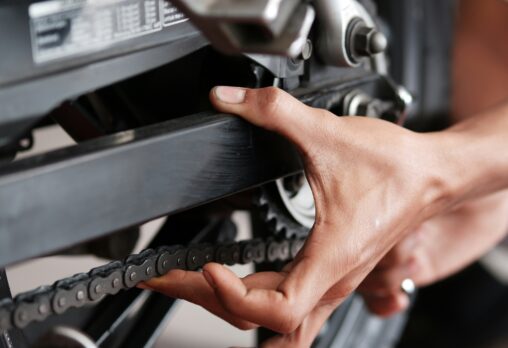
4. Chain, sprockets, and drivetrain

A chain left unlubricated over winter will have picked up rust, particularly in a humid garage.

  • Clean the chain with a proper degreaser, not just a wipe-down.
  • Lubricate it once clean and dry, then check tension against the manual’s specifications.
  • Look at the sprocket teeth for wear. Hooked or worn teeth mean it’s time to replace the set, not just the chain.

5. Brakes, cables, and controls

  • Check brake pad thickness on both wheels.
  • Squeeze the brake lever and clutch lever, checking for smooth engagement and no unusual play.
  • Inspect cables for fraying or stiffness, and lubricate where needed.
  • Test the lights, indicators, and horn. Bulbs and connections corrode in storage more often than riders expect.

The full motorcycle inspection checklist

Running through the above in order gives you a solid motorcycle inspection checklist for spring:

  1. Battery charge and terminals
  2. Tyre pressure, tread, and age
  3. Oil, coolant, and brake fluid
  4. Chain, sprockets, and drivetrain
  5. Brakes, cables, lights, and controls

If you’re not confident doing any of these yourself, a pre-season service covers all five in one visit, and it’s worth booking early before the spring rush hits workshops.

Frequently Asked Questions

How long can a motorcycle battery sit without charging? 

Most batteries will hold charge for four to six weeks without use. Beyond that, expect some capacity loss, and beyond a few months without a maintainer, a full recharge or replacement is often needed.

Do I need to change my oil before or after winter storage? 

After is generally better if it wasn’t done before storage, since old oil can hold moisture and contaminants that sat in the engine over winter.

What tyre pressure should I run after storage? 

Always follow the pressure listed in your owner’s manual or on the swingarm sticker, checked when tyres are cold, not immediately after riding.

How often should a motorcycle be serviced? 

Most manufacturers recommend a service every 6,000 to 10,000km or once a year, whichever comes first. A post-winter check is a good addition to that schedule, not a replacement for it.

Get through this tyre checklist before your first ride and you’ll spend spring on the road, not back in the garage.