Motorbike Tyre Pressure Safety Guide & Tips

Motorcycle Tyres Tips & Advice
a picture of Ari who is the owner of Tyreman M/C
Author
Ari Kypuros• Owner & Founder of Tyreman M/C
6 mins • June 27, 2022
a close up photo of a person monitoring the air pressure of a motorcycle tyre

If there is one thing the team at Tyreman M/C constantly reminds our customers, it’s to check their motorcycle tyre pressure regularly. Tyre inflation is extremely important, as the air within the tyre carries the load, unlike the tyre itself.

Ensuring the correct tyre pressure makes your riding experience safer and more comfortable while also increasing your tyre’s longevity. The ideal tyre pressure varies with each motorcycle, all of which have their own recommended psi pressure that the manufacturer has set.

Read on for our motorcycle tyre pressure guide and learn more about the factors that set the pressure, along with some important tyre safety tips from our experts.
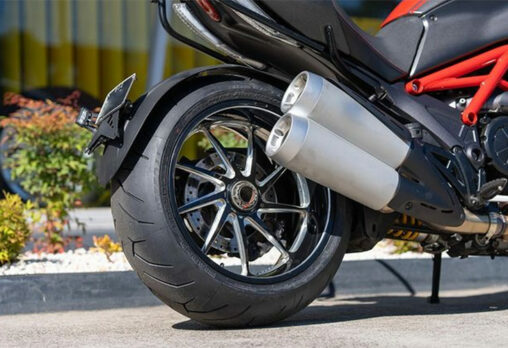
a side view of a motorcycle tyre up close

What is the ‘right’ motorcycle tyre pressure?

Street motorcycle tyre pressures usually sit between 28 and 40 psi (roughly 190 to 275 kPa). Your bike’s recommended pressures are printed on the tyre placard (usually on the swingarm, chain guard or under the seat) and in the owner’s manual, and that figure is always your starting point. Sport riding tends to use the lower end of the manufacturer’s range, while commuting and touring sit at the higher end.

As a general guide, we recommend 32 psi front and rear for maximum grip and sporty riding, or 40 psi front and 42 psi rear for maximum tyre life and even wear.

Motorcycle tyre pressure by bike type and load

Use this table as a quick tyre pressure calculator: find your bike type and riding style, then check the figure against your bike’s placard. All pressures are cold.

Bike type and use Front (psi) Rear (psi)
Sport or road, spirited riding 32 32
Sport or road, commuting and maximum tyre life 40 42
Cruiser 36–40 36–42
Touring 36–42 38–42
Adventure or dual sport (road) 33–36 36–42
Scooter 28–32 30–36
Off-road (dirt) 12–15 12–15

Carrying a pillion or loaded luggage? Add 2 to 4 psi to the rear tyre, or use the “loaded” figure on your placard if it lists one.

kPa to psi conversion

Owner’s manuals, tyre placards and service station pumps don’t always use the same unit, so it helps to know both. To convert kPa to psi, divide by 6.895. To convert psi to kPa, multiply by 6.895.

a person kneeling down next to their motorbike wearing motorbike gear and a jacket

Why is it important to check my tyres’ air pressure?

Under-pressurised tyres run hot, affecting the compound and accelerating tyre wear. If you ride on tyres lower than the recommended pressure, the performance and handling of your bike will be negatively affected, and things will get dangerous in certain conditions. Over-inflating creates a hard ride and also accelerates wear in the centre contact patch of the tyre.

The primary benefits of maintaining the correct tyre pressure include:

  • Saving Money: Tyre repairs or, even worse, bike repairs due to an unnecessary accident are costly; minimise this risk by riding on the right tyre pressure.
  • Riding Confidence: You’ll be more confident on the road or track with tyres that perform as they should and a bike that handles comfortably.
  • Safer Operation: When you have more control over your bike, you can operate more safely, especially at high speeds.
  • Can Prevent Tyre Wear: Get the longevity you should from your tyres by keeping them pressurised correctly.
  • More Comfortable Ride: A smooth ride starts with consistent tyre maintenance and the correct tyre pressure.
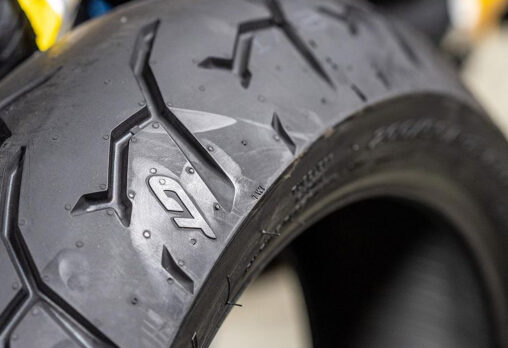
a close up of a rear motorbike tyre

What can affect my tyres’ air pressure?

Even if your tyres are in good shape (no holes or tears), the pressure can still be affected by a range of factors. This is why regular riders should check their tyre pressure fortnightly at least. This is also a good time to check the condition of your tyres, to understand whether or not they are due for a replacement. This is also a good time to check the condition of your tyres for any signs of tyre wear.

The primary factors that can alter your tyre inflation include:

  • Weight
  • Tyre Construction
  • Tyre Types – Road or Track Tyres
  • Hot and Cold Pressures
  • Ambient Temperature
a guy wearing a blue jumpsuit checking the air pressure of a motorcycle tyre in store

How do I check my tyres’ air pressure?

Choosing a tyre pressure gauge

A good gauge is the most useful tyre tool you can own. There are three common types:

  • Digital gauges are the easiest to read and usually switch between psi and kPa.
  • Dial gauges need no batteries and stand up well to being thrown in a tool bag.
  • Pencil (stick) gauges are cheap and compact, but less precise.

Look for a gauge with an angled or 90-degree chuck. Motorcycle valves sit close to brake discs and spokes, so a straight chuck can be hard to seat properly.

How to check your tyre pressure

Always check tyre pressure when your tyres are cold, either before you ride or after the bike has been parked for a few hours. Warm tyres read higher and will give you a false result.

  1. Find the valve stem on your wheel rim.
  2. Remove the valve cap and wipe away any dirt around the valve.
  3. If you’re using a dial gauge, make sure it reads zero.
  4. Press the gauge firmly and squarely onto the valve. If you hear air escaping, reseat it.
  5. Read the pressure and compare it with the figure on your bike’s placard.
  6. Add air if it’s low, or press the valve core briefly to release air if it’s high, then check again.
  7. Refit the valve cap and repeat on the other tyre.
a close up of a motorbike sitting in a shop

When should I check my tyres air pressure?

All tyres lose air over time, so check your tyre pressure at least every two weeks, with the tyres cold.

If safety is your main priority (as it should be), check your tyres every time you ride. Most service stations have air pumps, but their gauges aren’t always accurate, and riding to the service station warms your tyres and pushes the reading up. Having your own pump or inflator at home means you can set the correct pressure while the tyres are still cold.

Tyre pumps and inflators

  • Portable tyre inflators run off a 12V socket or a rechargeable battery. They’re small enough to carry on longer rides or keep in the garage.
  • Tyre inflators with a gauge let you set a target pressure and switch off automatically once they reach it, which takes the guesswork out of topping up.
  • Manual tyre air pumps (foot or track pumps) need no power. They’re slower, but reliable and inexpensive.

Whichever you use, confirm the final pressure with your own gauge.

Not sure what pressure your bike should be running? Get in touch and we’ll help you find the right setting for your bike and tyres.

What problems can occur if tyre pressure isn’t monitored properly?

Most tyre wear issues come back to tyre pressure. Running too little air makes the tyre run hot and wear faster, while too much air wears the centre of the tread. Prolonged underinflation also causes irregular wear on the tyre’s edges, known as scalloping or cupping (alternating high and low spots across the tread).

Tyre pressure monitoring systems (TPMS) for motorcycles

A tyre pressure monitoring system uses a sensor on each wheel to read your pressure (and often tyre temperature) in real time, alerting you to a slow leak before it becomes a safety issue. Many newer bikes come with TPMS from the factory, and aftermarket systems can be added to most others.

  • Valve cap sensors screw onto your existing valves and are the easiest to fit yourself.
  • Internal sensors mount inside the wheel and are installed when your tyres are changed.

Readings show on a small handlebar display or a phone app, depending on the system. If your bike has internal tyre pressure sensors, let us know when you book your tyre fitting so we can work around them. A TPMS monitor is a great backup, but it doesn’t replace a regular check with a gauge.

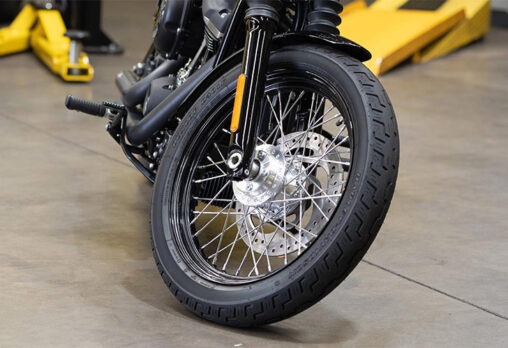
a close up photo of a motorcycle tyre

Tyre air pressure recommendations & tips

Most riders inflate their tyres with standard air, which is fine. Nitrogen inflation is an alternative. It escapes through the tyre more slowly than air and carries no moisture, so your pressure stays more consistent between checks. That helps your tyres wear evenly and hold their grip for longer.

Tyre pressure by brand

For road riding, Michelin, Pirelli, Metzeler and Dunlop all recommend running your bike manufacturer’s pressures, whichever of their tyres you fit. Track and race tyres are different, as each brand publishes its own pressure guides for its track ranges. Heading to a track day? Get in contact with Tyreman M/C and we’ll point you to the right setting for your tyre.

Checking your tyre pressure regularly is the easiest way to get more life, grip and safety out of your motorcycle tyres. If your tyres are wearing unevenly or due for replacement, read our guide on how to choose the right tyres for your next ride, or drop into our Preston store and Ari and the team will help you find the right fit.